
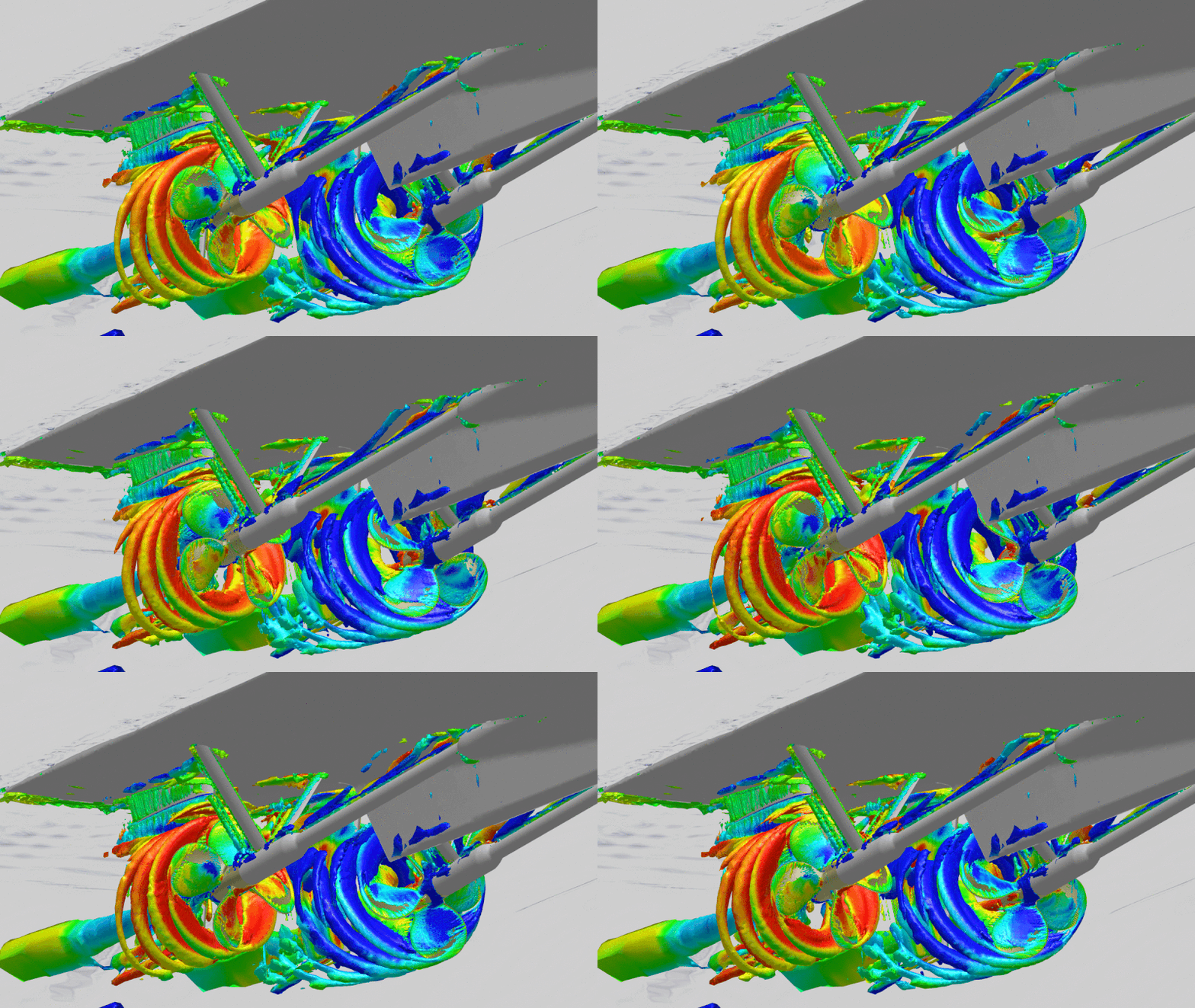
This course provides a comprehensive introduction to the hydrodynamic principles governing ship resistance and propulsion. It focuses on the physical mechanisms of resistance generation, propulsive force production, and their interaction with ship hull forms and propulsion devices.
This course covers the components of ship resistance, including frictional, wave-making, viscous pressure, appendage, and air resistance, along with methods for resistance decomposition and prediction. The theory of similarity and dimensional analysis is introduced as a basis for model testing and model–ship extrapolation. Empirical, semi-empirical, and numerical approaches to resistance estimation are systematically presented.
The course also covers the fundamentals of ship propulsion, including propulsion systems, propeller geometry, propeller hydrodynamics, cavitation phenomena, and the ship–propeller interaction. Special attention is given to the powering process, propulsive efficiency, and the determination of required engine power.
Modern approaches to hull form optimization, numerical flow simulation around ship hulls, and methods for reducing propulsive power and emissions are discussed. The course concludes with an overview of thrust augmentation devices and energy-saving technologies used in contemporary ship design.
- Лектор: Patsurkovskyi Pavlo