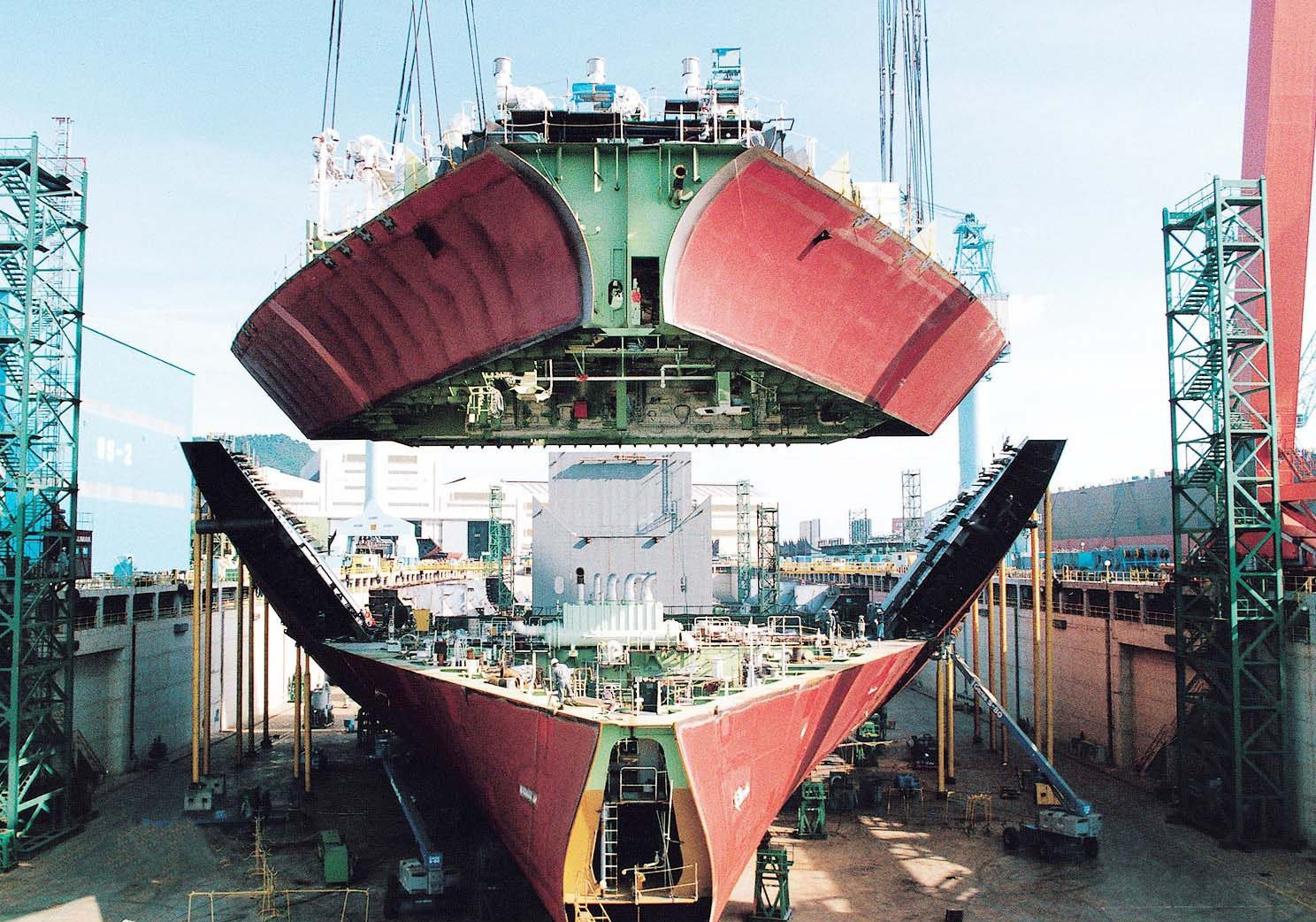
provides a comprehensive overview of shipbuilding materials and thermal processing. The course covers the fundamental structure and properties of metals, including crystal lattices, polymorphism, and alloy formation. It details the production processes of cast iron and steel (blast furnace, oxygen-converter, open-hearth, and electric-arc methods) as well as various casting techniques (sand-clay, chill mold, lost wax, centrifugal). The book also explains metal forming processes (rolling, forging, stamping, drawing) and machining operations (turning, milling, drilling, honing). Key theoretical topics include crystallization, crystal defects, elastic and plastic deformation, phase diagrams (including iron-cementite), and the structure/properties of carbon steels and cast irons. A significant portion is devoted to the basics of heat treatment—annealing, hardening, tempering, and chemical heat treatment—along with transformations in steels and the role of alloying elements. The course concludes with a classification of alloyed steels and their applications. Each chapter includes learning outcomes and self-control questions to reinforce understanding.

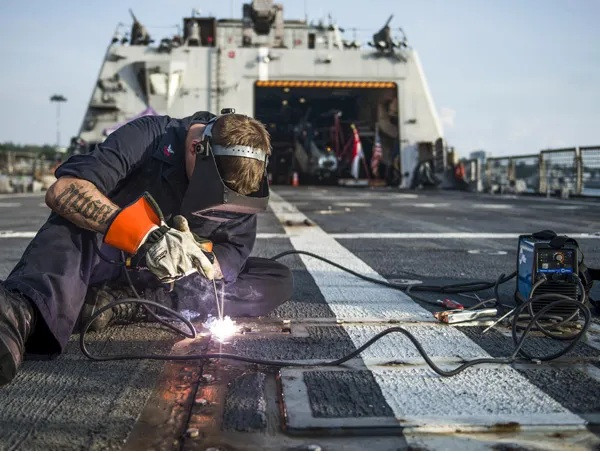
Provides a comprehensive overview of ship welding processes, equipment, consumables, and quality control methods. The course begins with the physical essence of welding and a detailed classification of welding methods into thermal, mechanical, and thermo-mechanical groups. It covers welding joints, weld types, and standardized welding symbols essential for interpreting engineering drawings.The fundamentals of arc welding are thoroughly explained, including the nature of the electric arc, polarity, static voltage-ampere characteristics, and arc shielding. The book describes power sources (transformers, rectifiers, generators, inverters) and their external characteristics, as well as consumables such as coated electrodes, flux-cored wires, and submerged arc fluxes.Major welding processes covered include: Shielded Metal Arc Welding (SMAW), Gas Metal Arc Welding (GMAW/MIG/MAG), Submerged Arc Welding (SAW), Oxyacetylene Welding, Electroslag Welding (ESW), Electron Beam Welding (EBW), Plasma Arc Welding (PAW), Electric Resistance Welding (ERW), as well as solid-state processes like Explosion, Friction, and Diffusion Welding. The course also addresses thermal cutting processes (oxyacetylene, underwater, plasma-arc cutting), brazing, and soldering.Important practical topics include weldability of carbon and low-carbon steels, carbon equivalent calculation, preheating requirements, arc blow problems, and common weld defects (undercutting, porosity, slag inclusion, cracks). The final chapters cover destructive testing (tensile, bend, nick break tests) and non-destructive testing (magnetic particle, X-ray, acoustic emission) methods for weld quality control. Each chapter includes learning outcomes and self-control questions to reinforce understanding.